
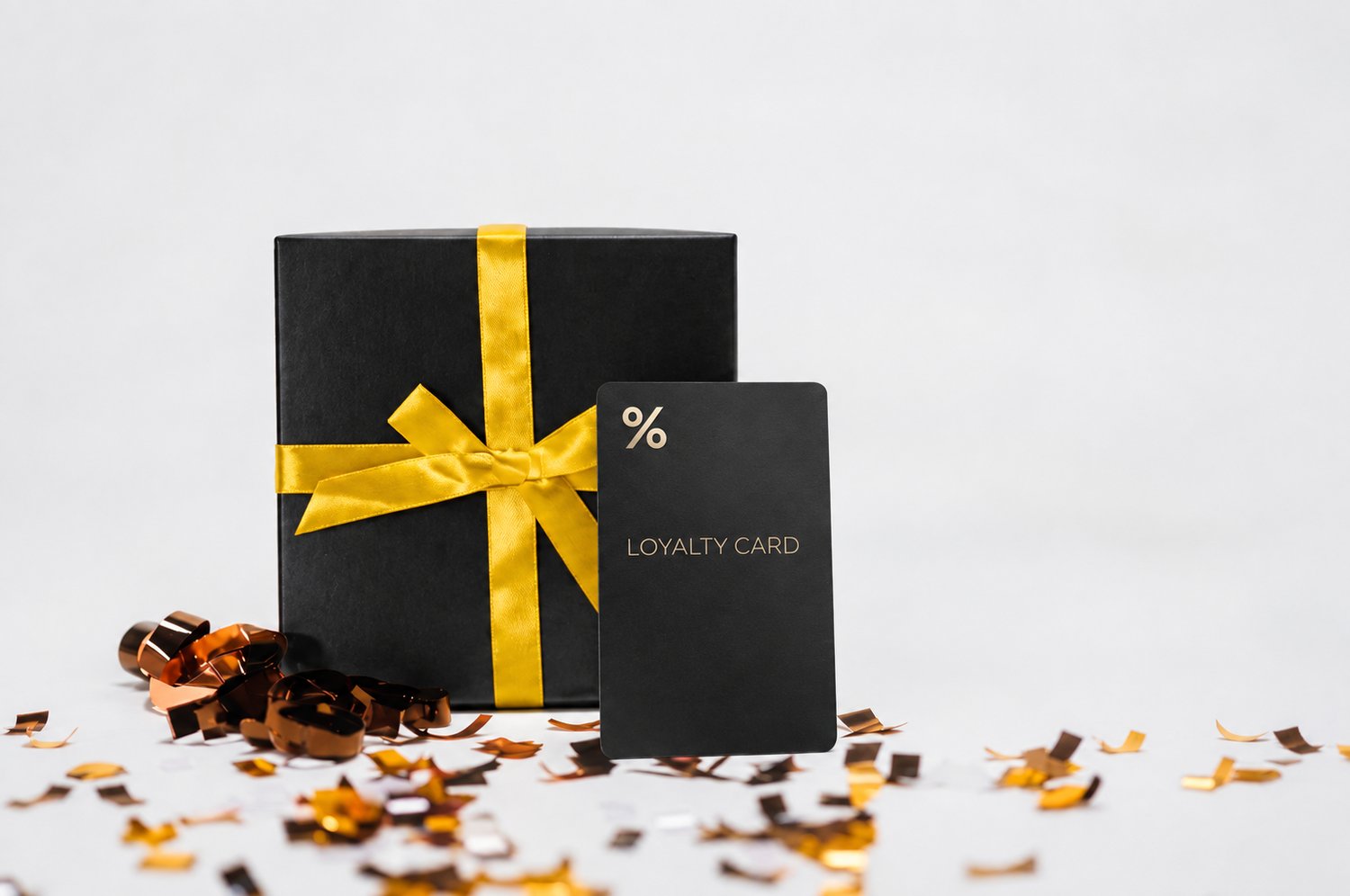
A loyalty card can be a great way to encourage customers to come back, but there is one important thing to think about before you print a single card:
Is the reward actually worth coming back for?
It is easy to focus on how many stamps a customer needs or how the loyalty card will look. But one of the most important parts is the reward itself. If customers don't really want the reward, even the most beautifully designed loyalty card won't do much to encourage another purchase. So, before you decide on your stamps, points or card design, let's look at what makes a reward attractive enough to bring customers back.
The problem with rewards that don't feel rewarding
A loyalty card can be a great way to encourage customers to come back, but you should consider if the reward is actually worth coming back for. Not every discount or freebie feels like a real reward. Imagine someone buying several of your drinks, their loyalty card is full, and they finally receive €1 off their next order. Putting yourself in their shoes, technically, you received something, but does it make you excited enough to come back?
Probably not.
The problem isn't the discount itself. It's the reward being too small or not feeling valuable enough. A small discount may not feel as exciting as receiving a free product or upgrade, even if the physical reward costs the same amount as the discount off.
Now imagine a baker offering a free box of cupcakes after several orders, a nail artist offering a free nail add-on, or a candle maker giving a free mini candle after a certain number of purchases.
Those rewards are connected to what the customer already enjoys buying or enhance the experience they already value.
The same applies to rewards that require customers to make a large number of purchases before they receive anything. If the reward feels too far away, customers may just forget about the card.
A loyalty programme should give customers a reason to come back. That is very different from simply giving them a card and hoping they use it.
What makes a reward attractive?
There isn't one perfect reward for every drink business. What works for a coffee business may not work for a hair stylist. What works for a handmade jewellery business may not work for a baker.
However, there are a few things that can make almost any reward more appealing.
1. It should feel valuable
Your reward doesn't necessarily have to be expensive for you, but it should feel valuable to the customer.
A free drink, free topping, free upgrade or exclusive product can often feel more exciting than a small discount. The key is perceived value.
For example:
"Get €1 off your next drink" versus "Your next drink is on us!"
Depending on your pricing and margins, the actual cost to your business might not be dramatically different. But the second reward can feel much more exciting.
2. Give them something they actually want
This sounds obvious, but it's easy to overlook. Your reward should relate to what your customers already enjoy buying. You don't have to remember every customer's favourite product. Look at what people are already buying. If your best-selling drink is your signature smoothie, that could be a good reward. If customers regularly add extra toppings to their bubble tea, a free topping might be more appealing.
So pay attention to:
- Your best-selling products — What do customers buy most often?
- Popular add-ons — What extras do people regularly choose?
- Repeat purchases — What do customers tend to come back for?
- Customer feedback — What do people ask for or mention positively?
- Simple polls — Ask customers what reward they would prefer.
Think about your customer's favourite part of the buying experience and consider whether you can turn that into the reward. Ask yourself, “Which reward would you rather have?” Two or three options can tell you much more than guessing. The goal isn't to create the cheapest or most expensive reward. It's to create one that has enough perceived value to motivate your customers, while staying financially stable
3. Don't make them wait forever
A reward that takes too long to reach can lose its appeal.
Imagine a customer buying a drink once a week. If they need 15 purchases before receiving a reward, they could be waiting months. By the time they get close, they may have lost the card, forgotten about it or simply stopped caring. A shorter reward cycle can create a stronger sense of progress, but it should feel achievable based on how frequently your customers purchase.
For example:
Buy 7 drinks → Get your 8th free is doable if customers purchase your drink once a week
rather than Buy 7 candles → Get your 8th free, if customers buy once every 3 months
Also, buy 7 drinks
can feel much more achievable than:
Buy 15 drinks → Receive a discount
If customers purchase regularly, a candle business could use:
Buy 4 candles → Get a mini candle free
If clients return often for several appointments, a beauty business could offer:
Book 4 appointments → Receive a complimentary add-on
Of course, the right number depends on your prices, margins and how frequently your customers purchase.
Make the reward feel like a treat
There's a psychological difference between receiving a reward and simply receiving a discount.
A reward can feel like something you've earned.
.Instead of:
"Receive 10% off after 10 purchases."
You could offer:
"Your next drink is our treat."
Or:
"Enjoy a free mini candle on us."
Or:
"Your next nail art upgrade is free."
It turns the reward into a moment rather than simply reducing the price.
That little shift in wording can make your loyalty programme feel more enjoyable.
There's nothing wrong with offering a discount as a reward. In fact, a discount can be a great option when it makes sense for your business.
Match the reward to your business
The right reward will depend on what you sell, your margins, your customers and how often they typically purchase.
A free mini candle
If the customer's next order is €30, the 10% discount is worth €3.
Your mini candle might have a retail value of €8, but perhaps only costs you €2–€3 to produce.
To the customer, the free mini candle may feel like the better reward, while it may cost your business a similar amount or even less. This is why you should look at both your actual cost and your customer's perceived value.
Here are some ideas to get you thinking:
Coffee business
Tangible reward: Free coffee or upgrade
Discount: €2 off their next order
A tangible reward may work particularly well because coffee is purchased frequently and a free drink is easy for customers to understand.
Baker
Tangible reward: Free box of treats or cupcakes
Discount: €5 off their next order
If your smaller products have good margins, a free treat can sometimes make the reward feel more exciting than a small discount.
Think about the psychology behind repeat purchases
A good reward programme gives customers something to work towards. When customers can see their progress, the next purchase can feel like another step towards something they want.
For example:
✓ ✓ ✓ ✓ ○
One more purchase and they're there. That sense of progress can be surprisingly motivating.
It can also turn an occasional purchase into a habit.
Instead of thinking:
"Do I want a drink today?"
the customer may start thinking:
"I'm only one stamp away from my reward."
And that's where a loyalty card can become more than just a piece of printed paper. It becomes a small reminder to come back.
Your loyalty card should feel like part of your brand
Once you've figured out the reward, don't forget about the card itself. A loyalty card is something your customer may keep in their wallet, bag or somewhere around their home. That makes it another small opportunity for your brand to stay visible. A generic loyalty card can do the job. But a branded loyalty card can make the experience feel much more intentional. Your colours, fonts, illustrations, wording and overall style can make the card feel like an extension of your brand rather than something added as an afterthought.
Introducing the Reward Brand Sip Card
If you're ready to give your customers a reason to come back, explore the Reward Brand Sip Card, made for drink businesses. If you are in another industry, contact me, and I'll find the right solution for you.
The Reward Brand Sip Card gives you a branded way to encourage repeat purchases while keeping the reward simple for your customers to understand. You can choose a reward that makes sense for your business, then use the card to help customers keep track of their progress. Whether you're rewarding customers with a free drink, an upgrade, an add-on or another special offer, the idea is the same:
Give them something they actually want — and make the journey towards it feel achievable.
Give them a reason to come back
Before thinking about the design, think about the experience.
What would make your customer feel excited to complete their card?
What would make them think, "I'm coming back for that"?
Once you've found that reward, your card becomes much more than a way to count purchases. It becomes a simple tool for creating repeat customers and keeping your brand in their hands.
Comments ()